WE MAKEIDEASMOVE.
MARGIN explores the friction between design, code, motion, and human curiosity. We construct experimental interfaces, digital identities, and physical computing spaces for museums, festivals, and culture.
SOME THINGS
ARE BETTER
SEEN MOVING.
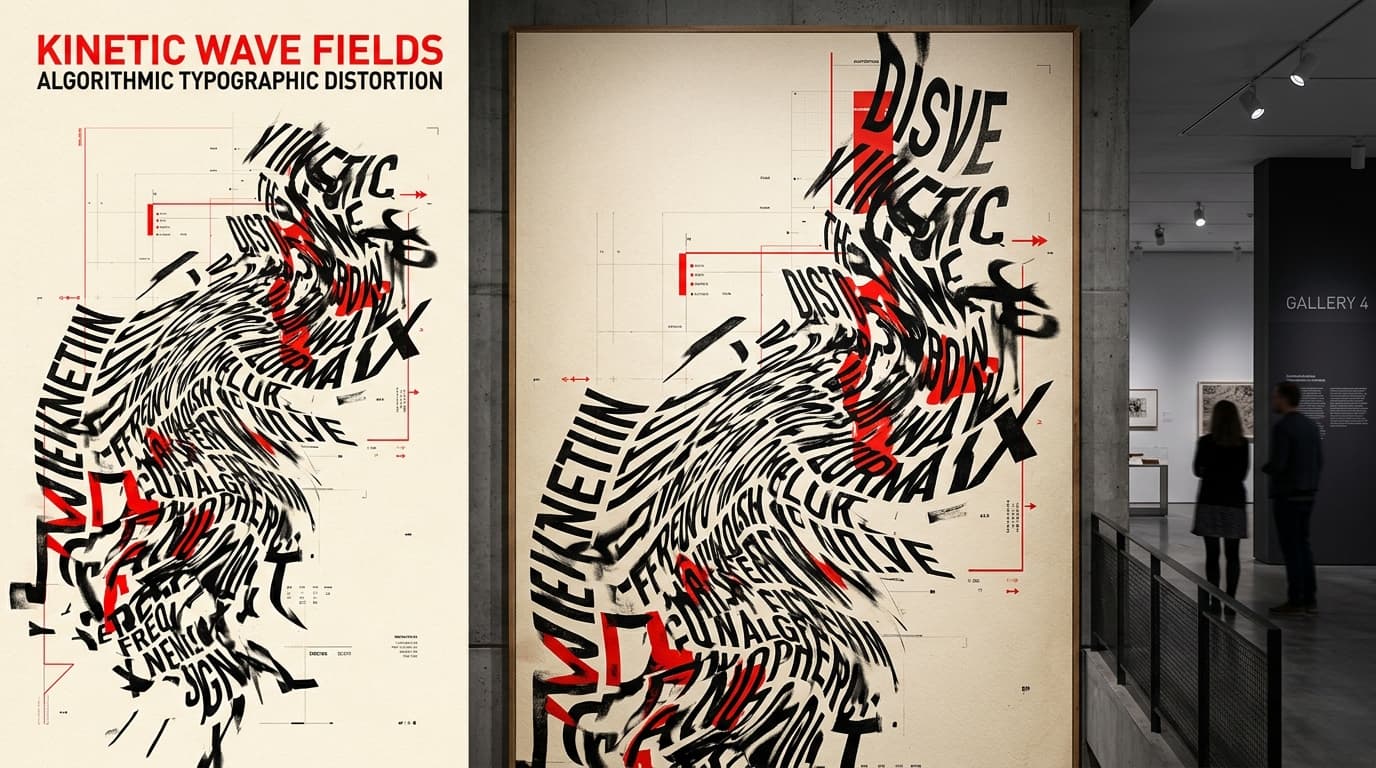
MOTION SYSTEM
A dynamic kinetic typographic system that deconstructs institutional glyphs in real-time response to gallery decibel levels and ambient visitor circulation. Tested over 120,000 algorithmic cycles.
“real-time audio response / tested at 96kHz”
GOOD IDEAS
ARE USUALLY
A LITTLE MESSY.
Clean software is an illusion constructed through dozens of chaotic drafts. We don't hide the mechanical scribbles, stress tests, or broken prototypes that get us to the final build.
QUESTION
We begin by deconstructing every assumption. What purpose does this technology serve? Why does the screen exist? What happens if we remove the expected interface entirely?
SKETCH
Before writing a single line of shader code, ideas exist as rapid mechanical ink scribbles, architectural flow diagrams, and rough spatial coordinates on heavy sketchbook sheets.
BREAK
We push algorithms until the math fractures. Overdriving physics parameters, corrupting vertex buffers, distorting timing curves. Discovery happens at the point of failure.
BUILD
Engineered systems built on WebGL, custom shaders, headless pipelines, and low-latency interaction protocols. Mathematical precision meets expressive nuance.
TEST
We evaluate how humans intuitively respond. Do micro-interactions feel tactile? Does the motion convey physical weight? Is the visual language instantly legible?
REFINE
Stripping away unnecessary flourish. Calibrating easing curves, honing micro-timings down to single frames, and aligning every technical coordinate with intentional human emotion.
SHIP
Delivering permanent museum installations, high-performance web systems, and autonomous digital ecosystems that live in the wild and inspire human curiosity.
NOT EVERYTHING
NEEDS TO BECOME
A PRODUCT.
Interactive glyph deconstruction. Characters displace elastically according to cursor velocity vectors and sinusoidal damping harmonics.
Coupled mathematical oscillators tracing Lissajous paths and phase-space orbits in real time. Demonstrates natural mechanical weight in digital space.
Parametric topological wireframe that recalculates its surface normal vectors based on mouse proximity and perlin noise perturbation.
Real-time shader math and deterministic state machines running in-browser. Interactive parameters let you adjust recursive depth and bifurcation constants.
Temporal slit-scan visualizer fragmenting graphic pixels across time axes. Creates a tactile, paper-halftone raster effect strictly in Ink and Signal Red.
Silent synthetic audio spectrum analyzer. Visualizes harmonic overtones, Fourier phase transforms, and binaural beats with mathematical fidelity.
BEFORE THE
FINAL FORM.
ROUGH UI SCHEMATIC & GESTURE SYSTEM
Early deconstruction of spatial mobile navigation and tactile physics.
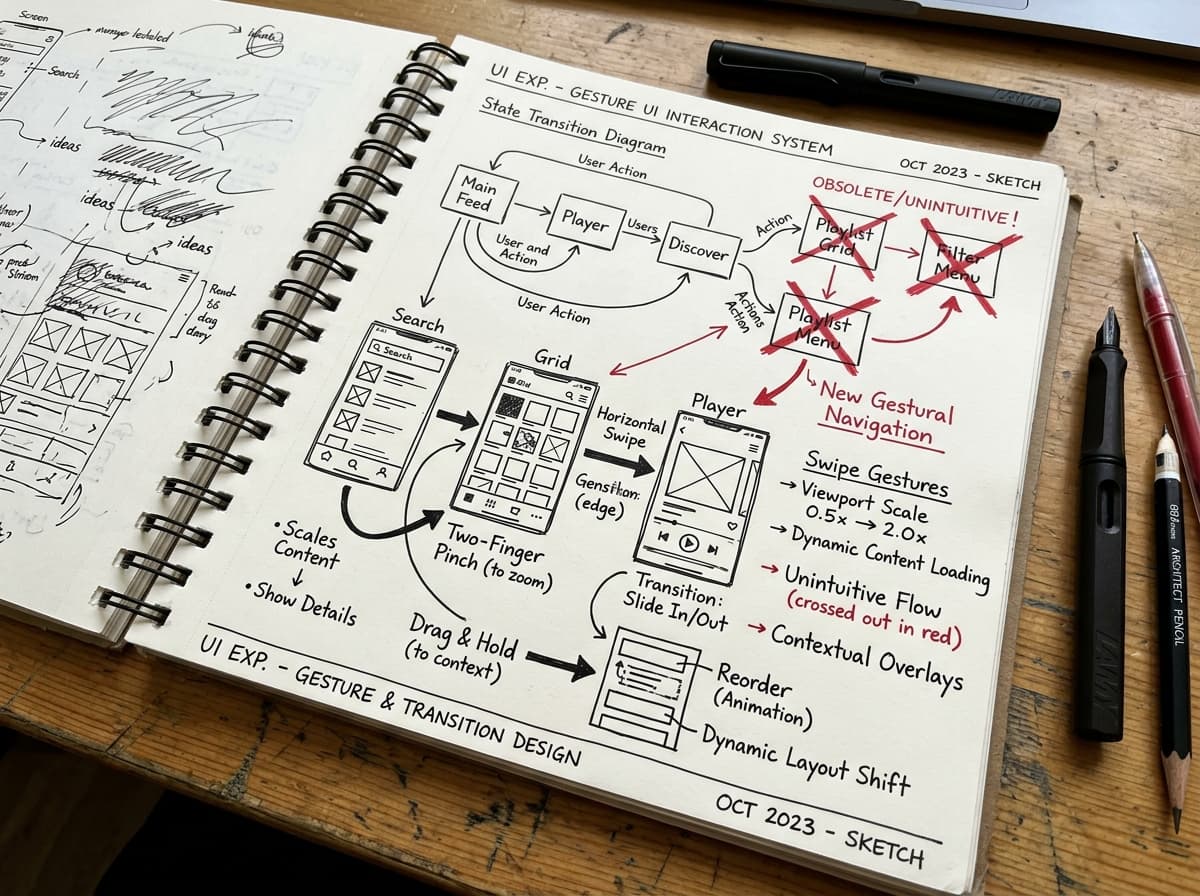
Gestural elastic canvas with spatial direct manipulation.
THE BEST WORK
LIVES BETWEEN
BOTH.
Drag the slider below to explore how pure mathematical logic converges with spontaneous human imperfection.
COMPUTATIONAL
PRECISION
• COORDINATES: ABSOLUTE EUCLIDEAN VECTORS
• TYPOGRAPHY: STRICT SWISS GRID ALIGNMENT
• SAMPLING: DETERMINISTIC 60FPS CLOCK
• ERROR TOLERANCE: ZERO TOLERANCE PROTOCOL
IMPERFECT
CURIOSITY
STATIC IS JUST
A STARTING POINT.
THINGS WE KEEP
THINKING ABOUT.
Dispatches from the margin. Unresolved design arguments, ongoing studio inquiries, and notes pinned to our physical workspace wall.
WHY DO INTERFACES FEEL SO PERFECT?
Modern software worships smooth corners and calculated padding. But human thought is jagged, hurried, and revisionist. When an interface embraces subtle friction and visible thinking, it transforms from an appliance into a conversation.
CAN IMPERFECTION BE DESIGNED?
Artificial imperfection feels cheap when it is merely a filter. True imperfection stems from causality: the evidence of drafts, crossed-out dead ends, and visible structural scaffolding. You don't design flaws; you stop hiding the messy steps that got you there.
WHEN DOES MOTION BECOME TOO MUCH?
Motion should never be decorative confetti. If an element moves, it must answer: where did it come from, why did it react, and what physical mass does it possess? Restraint creates drama; gratuitous animation only induces fatigue.
WHAT HAPPENS WHEN A BUTTON FEELS ALIVE?
A button shouldn't just change color; it should acknowledge touch with subtle resistance, micro-spring inertia, or an ink mark that confirms human agency. The difference between a click and an action is emotional resonance.
WHY DO WE STILL LOVE PAPER?
Paper absorbs ink permanently. A mark on paper cannot be undone with Command+Z without leaving a ghost of the attempt. That irreversibility forces commitment, deliberate mark-making, and deep respect for the blank space in between.
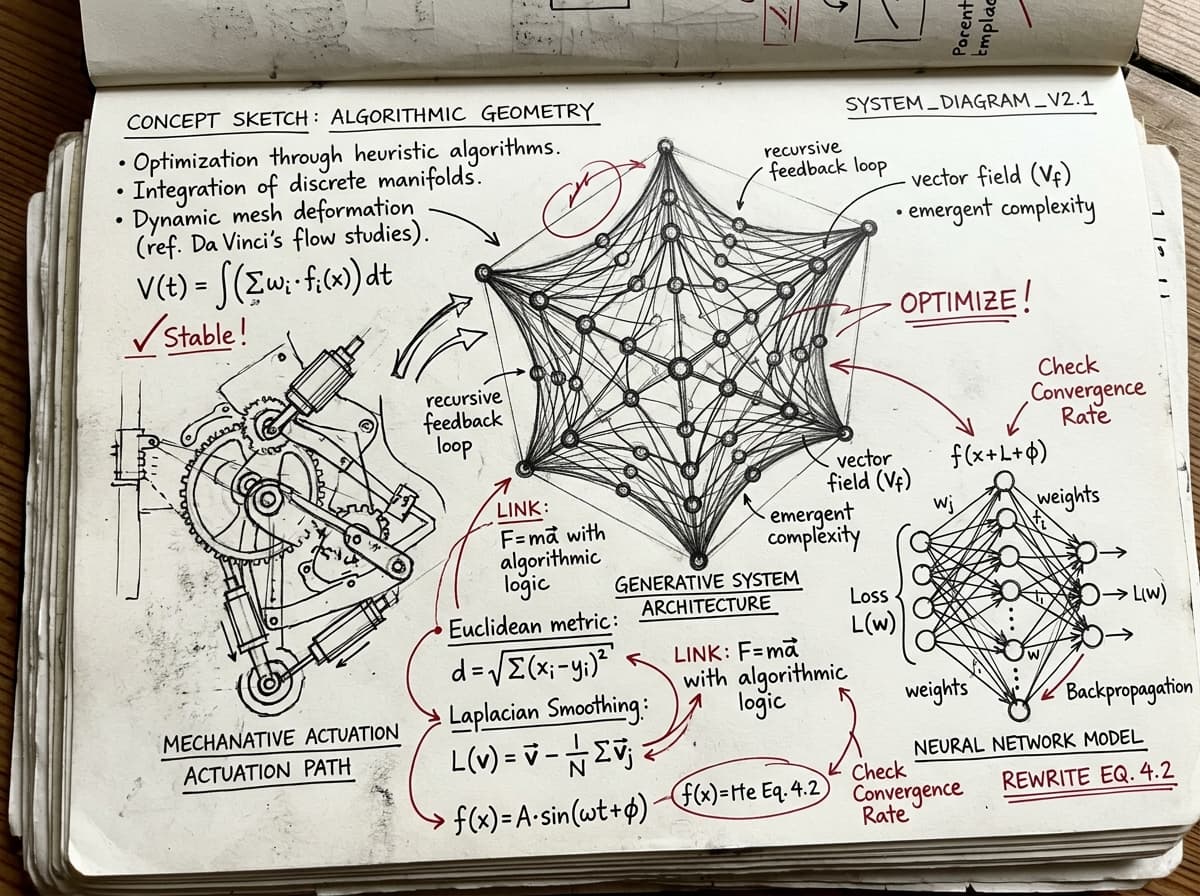
FLOATING
IDEA SHEETS.
WE LIVE
IN THE
MARGIN.
MARGIN is an experimental creative technology studio exploring the space between design, code, motion, and human curiosity.
Based in London, we collaborate with pioneering cultural institutions, forward-thinking brands, and experimental architects to build websites that think, spatial installations that react, and digital identities that mutate autonomously.
HAVE AN IDEA?
LET'S MAKE IT MOVE.
Whether you have a fully scoped brief or just a raw question scribbled in the margin of your notebook, tell us what you're thinking.